Loading
Geographic strategy
Hyderabad First. India Next.
An opportunity marketplace only works when both sides are dense enough for something to actually happen. We build depth in one city before adding the next.
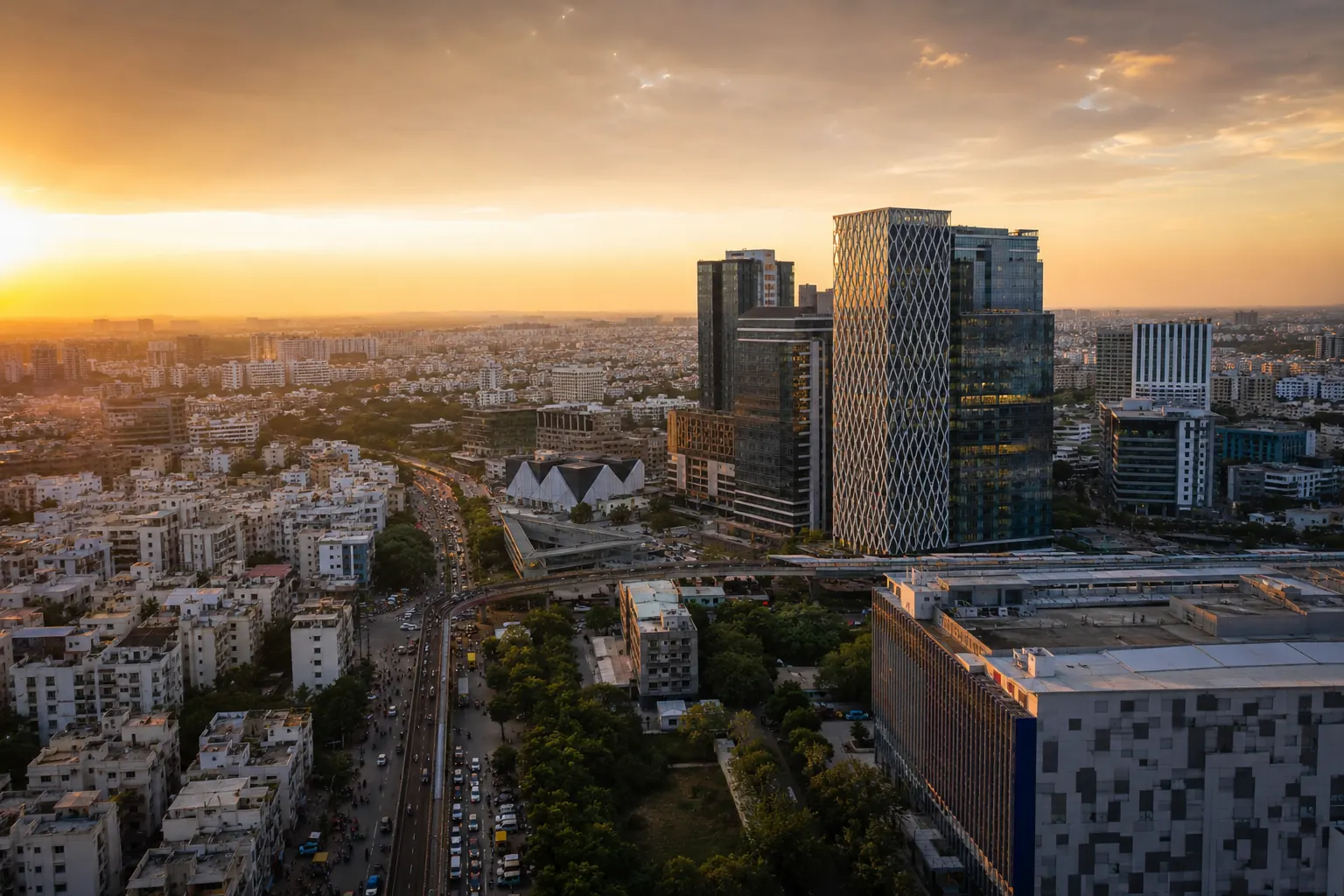
Why Hyderabad
Dense enough to have options. Small enough that people reply.
Hyderabad has large technology employers, a substantial life-sciences base, a growing set of product startups and a functioning incubator layer — and an ecosystem small enough that a founder will answer a well-written message from a student.
Options without changing city
A computer science student and a pharmacy student are not looking at completely different cities. Changing direction here does not mean relocating.
Introductions travel two steps
For someone with no network, that difference decides whether the first opportunity is reachable at all.
Costs give students room
Living costs allow a student to take a modestly paid internship that teaches them something, rather than only the highest-paying option available.
The path
One city at a time.
Each city is added once the previous one has enough companies that a student finds several relevant roles, and enough students that a company finds several relevant candidates.
- 1
Hyderabad
Startups, technology companies, incubators and founder networks.
- 2
Bengaluru
The deepest product and design employer base in the country.
- 3
Chennai
Manufacturing, cloud infrastructure and consumer brands.
- 4
Pune
Engineering, games, D2C commerce and a large student population.
- 5
Mumbai
Financial services, media and consumer businesses.
- 6
Delhi NCR
Education, policy, enterprise software and services.
- 7
India
A student in one city discovering an opportunity in another.
One opportunity network
A student in one city should be able to discover an opportunity from a company in another.
The institutional network matters as much as the employer network — particularly the colleges that sit fifteen kilometres from a well-known campus and have almost no employer contact.
Universities & engineering colleges
Technical and research-focused institutions, including the autonomous colleges outside the top handful that rarely see campus drives.
Management & professional institutions
Management, law, design, pharmacy and other professional institutions across disciplines.
Degree & autonomous colleges
Arts, science, commerce and other institutions across cities and smaller towns.

Bring your city into the network.
Colleges, employers, incubators and communities all expand where opportunity can reach.